


Professional SEO Services: Grow Your Business with Expert SEO Strategies
Your website may have great products, useful services, and helpful content. But if people cannot find it on Google, you may miss many chances to grow your business. Here, professional SEO services can help.
Search engine optimization (SEO) helps your website appear when people search for products, services, and answers related to your business. A good SEO strategy can bring more of the right visitors to your website, build trust, and help turn visitors into customers.
At B2B Elevation, we provide SEO and digital marketing support for SaaS and marketing businesses. Our work focuses on improving website content, search visibility, website performance, and online authority.
Whether you want to improve your current rankings, attract more qualified leads, or build a stronger online presence, the right SEO plan can help you move toward your goals.
In this guide, you will learn what professional SEO services include, how they work, why businesses need them, and how to choose the right SEO partner.
What Are Professional SEO Services?
Professional SEO services are expert services that help businesses improve their visibility in search engines like Google. They include keyword research, website optimization, content writing, technical improvements, and link building.
The main goal is to help your website reach people who are already searching for information, products, or services related to your business.
For example, imagine you run a SaaS company that sells project management software. Your potential customers may search for terms like:
- Best project management software
- Project management tools for small businesses
- How to manage remote teams
- Project management software pricing
A professional SEO plan helps your website target these searches with useful pages and content.
SEO is not only about getting more visitors. It is about attracting people who have a real interest in what your business offers.
What Do Professional SEO Services Include?
A complete SEO strategy covers different parts of your website. Each part has a different job, but they all work toward the same goal: better search visibility and more useful website traffic.
Here are the main services businesses should understand.
1. SEO Audit and Website Analysis
An SEO audit is the first step in understanding your website’s current performance.
SEO experts review your website to find problems that may affect its search visibility. They also look for areas where your website can improve.
An SEO audit may include:
- Checking pages that Google can or cannot index
- Finding broken links and website errors
- Reviewing page titles and meta descriptions
- Checking website speed and mobile performance
- Finding missing or weak content
- Reviewing internal links
- Checking backlinks and referring websites
- Comparing your website with competitors
The audit helps create a clear action plan. Instead of making random changes, your SEO team can focus on the issues that matter most.
2. Keyword Research
Keyword research helps you understand what your target audience searches for on Google.
It is an important part of SEO because the wrong keywords can bring visitors who have no interest in your products or services.
For example, a SaaS company selling email marketing software should target searches related to email marketing tools, automation, campaign management, and similar topics.
Professional keyword research looks at:
- Search intent
- Keyword relevance
- Search demand
- Keyword competition
- Related search terms
- Commercial and informational searches
- Long-tail keywords
It is also important to understand search intent.
Someone searching for “what is email marketing” may want to learn about the topic. Someone searching for “best email marketing software for businesses” may be comparing products before making a purchase.
Your website should have the right content for both types of visitors.
3. On-Page SEO
On-page SEO means improving the content and HTML elements of your website pages so search engines and visitors can understand them better.
Every important page should have a clear topic, useful information, and a structure that makes it easy to read.
On-page SEO services may include:
- Optimizing page titles
- Writing useful meta descriptions
- Improving H1, H2, and H3 headings
- Adding relevant keywords naturally
- Improving content quality
- Adding internal links
- Optimizing images and alt text
- Improving URL structure
- Matching content with search intent
For example, if your target keyword is “SaaS SEO services,” your page should explain what SaaS SEO means, what the service includes, and how it helps software businesses.
Simply adding the keyword many times will not make the page useful. The content must answer the reader’s questions.
4. Off-Page SEO and Link Building
Off-page SEO includes activities that improve your website’s reputation and authority outside your own website.
Link building is one part of this work. It involves earning links from other relevant websites that point to your pages.
For example, a SaaS company may earn a backlink from a trusted software publication, a relevant marketing blog, or an industry resource.
A good link-building strategy focuses on:
- Relevant websites
- Quality backlinks
- Natural anchor text
- Useful guest articles
- Editorial link placements
- Industry relationships
- Brand mentions
Not all backlinks offer the same value. A link from a relevant, trusted website is generally more useful than many links from unrelated or low-quality websites.
Avoid link schemes, spam links, and networks created only to manipulate rankings. Link building should support your website’s reputation, not put it at risk.
5. SEO Content Writing
Content plays an important role in helping people find and understand your business.
When your website answers real questions, explains your services, and provides useful information, it gives visitors a reason to trust your brand.
Professional SEO content writing can include:
- SEO-friendly service pages
- Informational blog posts
- Product and feature pages
- Industry guides
- Comparison articles
- How-to guides
- Frequently asked questions
- Topic cluster content
For SaaS and marketing companies, content should cover both the problems customers face and the solutions your business provides.
For example, a company selling marketing automation software may publish articles about email automation, lead generation, customer journeys, and marketing workflows.
Each article should serve a clear purpose. Avoid publishing content only to add more pages to your website.
6. Technical SEO and Website Development
Technical SEO focuses on the parts of your website that help search engines access, understand, and index your pages.
Even useful content can struggle to perform if search engines have trouble accessing the website.
Technical SEO work may include:
- Checking website crawlability
- Fixing indexing problems
- Reviewing redirects
- Finding broken pages
- Improving mobile usability
- Reviewing site structure
- Checking Core Web Vitals
- Fixing duplicate content issues
- Reviewing XML sitemaps
- Checking structured data where relevant
Website development can also support SEO by fixing technical problems and improving how a website works.
For example, a slow website, broken navigation, or poor mobile layout can make it harder for visitors to use your site.
SEO and website development should work together so that both search engines and users can access important pages easily.
7. Local SEO
Local SEO helps businesses appear in search results when people look for services in a particular area.
For example, a person may search for an SEO company in New York or a marketing agency in Chicago.
Local SEO can include:
- Google Business Profile optimization
- Local keyword research
- Location-based landing pages
- Business information consistency
- Local business citations
- Customer review management
- Local website content
Local SEO is most useful for businesses that serve customers in specific locations.
For SaaS companies selling products across different countries, national or international SEO may be more relevant than local search optimization.
8. SEO Reporting and Performance Tracking
SEO needs regular rank tracking to know what is working and what needs improvement.
Professional SEO reporting helps businesses see how their website performs over time.
Common SEO metrics include:
- Organic clicks
- Search impressions
- Keyword rankings
- Organic traffic
- Indexed pages
- Backlink growth
- Important page performance
- Leads and conversions
Google Search Console helps website owners understand how their pages perform in Google Search. Google Analytics 4 can help measure what visitors do after reaching the website.
Reports should explain what changed, what work was completed, and what the next steps are.
A ranking increase alone does not always mean business growth. It is also important to measure whether SEO brings relevant visitors and leads.
How Do Professional SEO Services Work?
Professional SEO is an ongoing process. It takes research, planning, website improvements, and regular performance checks.
Here is how a typical SEO process works.
Step 1: Analyze Your Business
The first step is learning about your company, products, services, target audience, and business goals.
An SEO strategy for a SaaS company will be different from one for an online store or a local service provider.
Your SEO partner should understand:
- What your business sells
- Who your ideal customers are
- Which markets you want to reach
- What makes your product different
- Which competitors you face
- What you want SEO to achieve
This information helps build a strategy around your actual business needs.
Step 2: Research Keywords and Competitors
After understanding your business, the SEO team researches the keywords your potential customers use.
They also review competitor websites to understand:
- Which keywords competitors target
- What type of content they publish
- Which pages bring search traffic
- How their websites are structured
- Where they earn relevant backlinks
- Which content gaps your website can fill
The goal is not to copy competitors. It is to find opportunities they may have missed and create something more useful.
Step 3: Fix Website Issues
The next step is improving the website.
This may include fixing technical problems, improving page structure, updating titles, adding internal links, and making important pages easier to find.
The SEO team should work on high-priority issues first.
Step 4: Create and Improve Content
Your website needs helpful content that matches what your audience wants to know.
This may mean improving existing pages, writing new service pages, or publishing articles that answer common customer questions.
Each page should have a clear purpose and support a part of the customer’s buying journey.
Step 5: Build Website Authority
The SEO team works to improve your website’s authority through relevant backlinks, useful resources, industry relationships, and other legitimate off-page activities.
The focus should be on earning links that make sense for your industry and audience.
Step 6: Track Results and Improve
SEO work does not end after publishing content or fixing website problems.
Your team should review performance, identify new opportunities, and update the strategy based on real data.
Some pages may need better content. Others may need stronger internal links or technical improvements.
Regular updates help your SEO strategy stay useful as your business and search results change.
Why Does Your Business Need Professional SEO Services?
A good website is important, but people must be able to find it.
Professional SEO services help businesses improve their online presence and connect with people who are already looking for relevant solutions.
Here are some ways SEO can support business growth.
1. Improve Your Google Search Visibility
SEO helps your website become more visible digitally for searches related to your business.
When important pages are well optimized, they have a better chance of appearing for relevant searches.
This can help more potential customers discover your brand.
2. Attract More Relevant Visitors
Getting traffic is not enough. You need visitors who are interested in your products or services.
SEO helps you target relevant keywords and create content for people at different stages of their buying journey.
This can bring more qualified visitors to your website.
3. Build Trust in Your Brand
People often research a company before making a business decision.
Helpful articles, clear service pages, expert information, and relevant mentions across trusted websites can help build confidence in your brand and elevate your brand.
A useful website gives visitors a better understanding of what you offer and why it matters.
4. Support Long-Term Business Growth
SEO can continue bringing visitors after a page has been published and optimized.
However, rankings and traffic are never guaranteed. Competitors, search changes, website updates, and user behavior can all affect performance.
Regular SEO work helps your website adapt and find new opportunities.
5. Reach Customers at Different Buying Stages
Some visitors are learning about a problem. Others are comparing solutions or looking for a provider.
Your SEO content can support each stage.
For example:
- Awareness: What is marketing automation?
- Research: Benefits of marketing automation software
- Comparison: Best marketing automation tools
- Purchase: Marketing automation software pricing
This gives potential customers useful information as they move closer to a buying decision.
Professional SEO Services for SaaS and Marketing Businesses
SaaS and marketing businesses have different SEO needs from many other industries.
Their customers often compare several products, read detailed guides, check features, and review alternatives before making a decision.
This means their SEO strategy should focus on more than general traffic.
SaaS SEO Services
SaaS SEO helps software companies improve their visibility for searches related to their products, features, and customer problems.
A SaaS SEO strategy may include:
- Product and feature page optimization
- Software-related keyword research
- Comparison and alternative pages
- Educational blog content
- Technical SEO
- Relevant link building
- Product-focused internal linking
- Organic lead generation
For example, a company selling customer support software may target searches related to help desk tools, customer service automation, ticket management, and knowledge base software.
The aim is to connect the software with people who are looking for a solution.
Marketing Agency SEO Services
Marketing agencies need to reach businesses looking for marketing support.
Their SEO strategy should target the services they provide and the problems their ideal clients want to solve.
This may include:
- Service page optimization
- Marketing-related keyword research
- Industry-focused blog content
- Case studies and project pages
- Relevant backlinks
- Competitor research
- Website content improvements
For example, an agency offering content marketing may create useful pages about content strategy, SEO writing, content planning, and lead generation.
The content should explain the service clearly and show why it matters to potential clients.
How to Choose the Right Professional SEO Company
Choosing an SEO company is an important decision. The wrong provider may waste your time and money with poor-quality work.
Before hiring an SEO partner, consider these points.
1. Check Their SEO Experience
Look for a company that understands your industry and business model.
If you run a SaaS business, an SEO provider with experience in software marketing may understand your audience and search intent better than a general provider.
Ask about their past projects, work process, and areas of expertise.
2. Review Their SEO Strategy
A good SEO company should explain what its SEO strategy is and why.
Ask whether its strategy includes keyword research, website audits, blog writing, content optimization, technical SEO, and link building.
Be careful with companies that offer the same package to every business without understanding its goals.
3. Ask About Their Link-Building Methods
Backlinks can support SEO, but poor link-building practices can create risks.
Ask how the company finds websites, checks relevance, and handles link quality.
Avoid providers that promise thousands of backlinks without explaining where they come from.
4. Know Their Reporting Process
You should know what work is being done and how performance is measured.
Ask for regular reports that include important metrics, completed tasks, problems found, and future plans.
5. Avoid Guaranteed Ranking Promises
No SEO company can control Google’s ranking system.
Be careful if an agency promises a number-one position or guarantees results within a fixed number of days.
A trustworthy SEO Service provider will explain its process, set realistic expectations, and focus on measurable improvements.
6. Check Communication and Support
SEO requires regular communication between your business and the people working on your website. It helps handle customers’ inquiries quickly.
Choose a provider that answers questions, explains its recommendations, and keeps you informed about progress.
If you are comparing an SEO agency near me with a remote SEO company, look beyond location. Experience, industry knowledge, service quality, and communication are often more important than having an office nearby.
How Much Do Professional SEO Services Cost?
The cost of professional SEO services depends on the size of your website, competition, target market, and amount of work required.
A small website with a few important pages may need less work than a large SaaS website with hundreds of product, feature, and blog pages.
Common SEO pricing models include:
Monthly SEO Retainers
With a monthly retainer, a business pays a set amount for ongoing SEO work.
This may include keyword research, content optimization, technical SEO, link building, and monthly reporting.
Project-Based SEO
Some businesses hire SEO professionals for a specific project.
Examples include:
- SEO audits
- Website migration support
- Technical SEO improvements
- Website content optimization
- Keyword research
Hourly SEO Consulting
Hourly SEO consulting is useful when a business needs expert advice or help with a specific problem.
The cost depends on the consultant’s experience and the work involved.
What Affects SEO Pricing?
Several factors can affect the final cost:
- Website size and complexity
- Number of target keywords
- Industry competition
- Target countries and markets
- Content production needs
- Technical website issues
- Link-building requirements
- SEO goals and expected workload
Before choosing a package, ask for a clear list of services and deliverables. The cheapest option is not always the best choice.
How Long Does SEO Take to Show Results?
SEO usually takes time because search engines need to discover, crawl, understand, and evaluate website changes.
There is no fixed timeline that works for every website.
Some improvements may become visible within weeks, while competitive keywords and larger SEO projects may take several months or longer.
The timeline depends on factors such as:
- Your website’s current condition
- How competitive your keywords are
- Your website’s existing authority
- The quality of your content
- Technical SEO problems
- Your competitors’ activities
- How consistently SEO work is completed
New websites may need more time to build trust and visibility. Established websites may see improvements sooner when important problems are fixed.
A good SEO strategy focuses on steady progress rather than quick ranking promises.
Professional SEO Services vs. DIY SEO
Businesses can handle some SEO tasks themselves. However, larger websites and competitive industries may need professional support.
Here is a simple comparison.
| Area | DIY SEO | Professional SEO |
| Keyword research | Done in-house | Expert research and planning |
| Content writing | Internal team | SEO-focused content support |
| Technical SEO | Basic website checks | Detailed technical reviews |
| Link building | Limited outreach | Planned link-building campaigns |
| Competitor research | Manual checks | Structured competitor analysis |
| Reporting | Basic tracking | Regular performance analysis |
| Strategy | Based on available knowledge | Based on research and business goals |
DIY SEO may work for businesses with enough time and knowledge.
Professional SEO services can help when you need a clear plan, specialist skills, and consistent execution.
The right choice depends on your website, resources, and business goals.
Why Choose B2B Elevation for Professional SEO Services?
Your SEO strategy should support your business goals, not just increase website traffic.
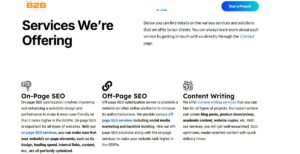
B2B Elevation focuses on SEO and digital marketing for SaaS and marketing businesses. We understand that these companies need more than general website optimization. They need relevant content, a strong online presence, and visibility for the searches their potential customers use.
Our services support different parts of your website’s growth.
On-Page SEO
We improve website pages through keyword research, content optimization, headings, meta information, and internal linking.
Our focus is to make important pages useful for visitors and easier for search engines to understand.
Off-Page SEO
We help improve website authority through relevant link-building activities.
Our approach focuses on website relevance, natural placements, and links that support your industry and content.
SEO Content Writing
We create content that is clear, useful, and search-focused for SaaS and marketing websites.
This includes blog articles, service pages, and other content that answers customer questions and supports your business goals.
Web Development
A website should be easy to use, work well on different devices, and support your SEO efforts.
Our web development services help businesses improve their websites and support the technical needs of their online presence.
A Strategy Built Around Your Business
Every business has different goals and challenges.
We believe SEO work should begin with analyzing your website, audience, competitors, and target market.
Rather than focusing only on keyword rankings, the aim is to improve the parts of your online presence that help people find, understand, and trust your business.
If your SaaS or marketing business wants to improve its organic search presence, contact B2B Elevation to plan the next steps.
Frequently Asked Questions
Q.1: Why should I hire professional SEO services?
Hiring SEO professionals can help you improve your website, find relevant keywords, create useful content, and build website authority. It can also save time by giving your business access to people with SEO knowledge and experience.
Q.2: What is included in a professional SEO package?
A professional SEO package may include an SEO audit, keyword research, on-page optimization, technical SEO, content writing, link building, and monthly reports. The exact services depend on your website and business goals.
Q.3: How do I choose the best SEO agency?
Check the agency’s experience, services, previous work, link-building methods, reporting process, and communication. Choose a provider that understands your industry and offers a clear strategy instead of guaranteed rankings.
Q.4: Can SEO help SaaS companies get more customers?
Yes. SEO can help SaaS companies reach people searching for software, product features, comparisons, and solutions to specific problems. Useful content and well-optimized product pages can support organic traffic and customer acquisition.
Q.5: Do small businesses need professional SEO services?
Small businesses can benefit from SEO if their customers use search engines to find relevant products or services. The right strategy depends on their target market, competition, budget, and business goals.
Q.6: Can professional SEO services improve AI search visibility?
SEO can support visibility in AI-powered search experiences by making website content clear, useful, well-structured, and easy to understand. However, appearing in AI-generated answers is not guaranteed. Strong content, clear business information, and a good website foundation remain important.
Build a Stronger Online Presence with B2B Elevation
Getting your website noticed by the right audience takes more than adding keywords to a few pages.
You need useful content, a well-structured website, relevant backlinks, and an SEO strategy that supports your business goals.
B2B Elevation helps SaaS and marketing businesses improve their websites through on-page SEO, off-page SEO, content writing, and web development.
If you want to improve your search visibility and reach more potential customers, start by understanding where your website stands and which SEO improvements can make the biggest difference.