


15 Viral Marketing Strategies to Grow Your Brand in 2026
Want more people to see, share, and talk about your brand? Marketing strategies can help you reach a large audience without spending a lot of money on ads.
The mindset is simple: create something people find useful, enjoy, or feel excited to share with others. When people keep sharing your content, your message can spread quickly across websites, social media, and online communities.
However, there is no magic formula for making a post go viral. The best approach is to know your target audience, create content they care about, and make it easy to share.
In this guide, you’ll learn 15 viral marketing strategies, see practical examples, and find how to turn online visibility into real business growth.
What Is Marketing?
Marketing is the process of promoting products or services to attract customers, increase sales, and build brand awareness. It includes creating valuable messages, understanding your target audience, and choosing the right channels to reach potential customers.
For example, a clothing brand may use social media posts, influencer partnerships, email campaigns, and paid ads to introduce its products to new customers. These activities help people learn about the brand, understand its value, and decide whether to buy.
Why Are Marketing Strategies Important?
Marketing strategies can help in a business growth, strengthen digital presence, and build stronger connections with customers.
Here are some key benefits:
- More brand awareness: More people learn about your business.
- Lower promotion costs: People sharing your content can extend its reach without requiring payment for every view.
- Higher engagement: Useful, funny, or emotional content can encourage comments, likes, and shares.
- More website traffic: People may visit your website after checking your content.
- Stronger customer trust: Recommendations from friends and real customers can influence buying decisions.
- More sales opportunities: A successful campaign can introduce your products or services to new buyers.
Remember that only views do not guarantee sales. Your content must reach the right people and give them a clear reason to take the next step.
15 Viral Marketing Strategies That Can Help Your Business Grow

The listed viral marketing strategies can help your business reach more people, attract potential customers, and build brand awareness.
1. Create Content People Want to Share
The first step is to give people a reason to share your content.
People often share content that inspires them, makes them laugh, teaches them something, or describes an experience they understand.
Think about your audience before creating a post. How to make them happy? What problems do they face? What would they send to a friend?
Example: A marketing agency creates a short video showing three common website mistakes that drive customers away. Business owners share the video with their team because it provides useful advice they can apply to their own business.
How to use this strategy:
- Solve one clear problem.
- Use a strong headline or opening
- Keep your message simple.
- Make the content useful, funny, or relatable.
- Give viewers a clear reason to share it.
Create content that not only gets attention, but also gives people something worth passing along.
2. Use Short-Form Videos
Short videos are a useful way to introduce products, explain ideas, and entertain viewers.
You can create videos for Youtube Shorts, Instagram Reels, Tiktok, and other platforms that support short-form content.
You do not need premium tools. A clear idea, a phone, and good lighting may be enough to get started.
Example: A furniture store creates a 25-second video showing how an empty room changes after adding warm light, stylish sofa, and a coffee table.
The video shows the results quickly and gives viewers a thought they may want to try at home.
Tips for better videos:
- Show something interesting in the first few seconds.
- Focus on one main idea.
- Add captions so people can follow without sound.
- Show real products or useful results.
- End with a natural call to action.
Make the video interesting from the start instead of focusing viewers to wait for the main point.
3. Use Humor and Relatable Situations
Funny content can guide people to connect with your brand. When a post describes a situation people recognize, they may share it with friends or coworkers.
The key is to make the humor fit your audience and business.
Example: A software company posts a funny video of a team member who keeps asking about the latest version of a file because nobody knows where it was saved.
People who have experienced the same problem may find the video relatable.
You can use humor in images, memes, short videos, and social media posts.
Keep these points in mind:
- Know your audience’s sense of humor.
- Avoid jokes that insult customers or groups of people.
- Use situations related to your industry.
- Connect the joke to your brand naturally.
- Make the message easy to understand.
A funny post should entertain viewers without making your business look careless or unprofessional.
4. Work With Micro-Influencers
Influencers have audiences that follow their content, opinions, and recommendations. Micro-influencers usually have smaller audiences than major celebrities, but their followers may share a good interest in a specific topic.
For many small businesses, working with a relevant creator can be more practical than paying a famous personality.
Example: A skincare brand partners with a beauty creator who shares a real product demonstration and defines how the product fits into a daily skincare routine.
The creator’s followers may check the brand through content that feels natural to them.
To use this strategy:
- Find creators who reach your target audience.
- Review their engagement and the quality of their comments.
- Check whether their values match your brand.
- Give them a clear campaign goal.
- Allow creative freedom while setting honest disclosure rules.
- Track clicks, sales, and other results.
Don’t choose an influencer based only on follower count. Audience relevance and genuine engagement matter too.
5. Encourage User-Generated Content
User-generated content (UGC) is content created by customers or other users rather than by your business.
It can include unboxing video, product photo, reviews, testimonials, and creative posts featuring your product.
This type of content gives people a chance to see how real customers use your product.
Example: A furniture brand invites customers to share photos of their living rooms using a branded hashtag. The company asks permission to feature selected photos on its social media pages.
This encourages customers to participate and gives the brand useful content.
You can encourage UGC by:
- Asking customers to share their experiences.
- Creating a simple campaign hashtag.
- Offering a relevant prize for a creative entry.
- Featuring customer stories with permission.
- Thanking people who participate.
Never use customers’ photos or videos without the necessary permission. Also, don’t buy fake reviews or present paid endorsements as independent opinions.
6. Start a Challenge People Can Join
A social media challenge invites viewers to complete a simple task and share the result of what they got.
Successful challenges are easy to perform, enjoyable, and simple to repeat.
Example: A fitness brand launches a seven-day movement challenge. Participants share a daily progress photo short video and invite friends to join.
A business can create challenges related to its products, services, or audience interests.
For better results:
- Keep the rules short.
- Make participation easy.
- Choose a clear hashtag.
- Show people how to take part.
- Share interesting entries with permission.
- Avoid challenges that involve dangerous activities.
A challenge should give people a reason to participate, not just ask them to advertise your business for free.
7. Use Emotional Storytelling
Stories help people understand why a brand exists and what makes it different.
A good story may focus on a customer’s problem, a community effort, a founder’s journey, or a meaningful result.
Example: A small business shares the story of how its founder started working from a bedroom and slowly built a team after finding its first customers.
People may connect with the effort, setbacks, and progress behind the business.
Use a simple storytelling structure:
- The problem: What was difficult?
- The journey: What steps were taken?
- The result: What changed?
- The lesson: What can the audience learn?
Keep your stories honest. Do not invent customer experiences or exaggerate results just to create an emotional response.
8. Create Useful and Surprising Content
People often share content when it teaches them something they did not know or shows them a result they did not expect.
This could be a practical tip, a myth-busting post, a before-and-after demonstration, or a simple experiment.
Example: An SEO agency shares a short guide showing how to find broken links on a website. The guide helps business owners understand a problem and gives them a useful next step.
Other content ideas include:
- Common mistakes in your industry.
- Quick tutorials.
- Before-and-after results.
- Simple comparisons.
- Frequently misunderstood facts.
- Useful checklists.
Make sure your information is accurate. A surprising claim may attract clicks, but misleading content can damage trust.
9. Launch a Referral Program
A referral program encourages existing customers to recommend your business to other people.
You can reward customers with discounts, account credits, bonus services, or other suitable benefits when their referrals meet clear conditions.
Example: A project management software company offers existing customers a service credit when a friend signs up for a qualifying paid plan.
The existing customer has a reason to recommend the tool, and the new user gets an incentive to try it.
To build a useful referral program:
- Explain the reward clearly.
- Make sharing easy.
- Give each customer a trackable referral link or code.
- Set fair and simple rules.
- Track how many referrals become paying customers.
Referral marketing does not always produce viral growth, but it can create a repeatable way to gain new customers through existing ones.
10. Partner With Another Brand
Brand partnerships help businesses reach people who may not know them yet.
Look for a business that serves a similar audience but does not directly compete with you.
Example: A furniture store partners with a home decor business to create a guide about designing a small living room.
Both brands can share the guide with their audiences. Readers receive useful advice, while each business gains exposure to potential customers.
You can collaborate through:
- Joint social media campaigns.
- Co-created videos.
- Webinars and online events.
- Shared guides and resources.
- Product bundles.
- Giveaways with clear terms.
Choose a partner based on audience fit, shared values, and the value you can provide together.
11. Use Giveaways With a Clear Goal
Giveaways can encourage people to engage with your brand and introduce it to new audiences.
However, a giveaway that attracts people who only want free products may not bring useful leads or sales.
Example: A design software company offers a free annual subscription to one winner. To enter, participants complete a simple, relevant action allowed by the platform’s rules.
A good giveaway should attract people who are likely to care about your product.
Follow these tips:
- Offer a prize related to your business.
- Set clear entry rules and deadlines.
- Explain how the winner will be selected.
- Follow the platform’s promotion rules and local laws.
- Measure relevant leads and sales, not only entries.
Do not require fake engagement or misleading actions. The goal is to attract the right audience, not simply collect a large number of entries.
12. Join Relevant Trends at the Right Time
Trending topics can help your content reach people who are already interested in a subject.
But not every trend is right for every business. A trend should make sense for your audience and brand.
Example: A project management company uses a popular video format to show the difference between a disorganized project and a well-planned one.
The familiar format makes the message easy to understand.
Before using a trend:
- Check whether your audience follows it.
- Make sure it fits your brand.
- Add a useful or original idea.
- Publish while the trend is still relevant.
- Avoid sensitive topics you do not understand.
Do not copy another creator’s content without permission. Use trends as inspiration, then add your own message.
13. Make Your Content Easy to Share
Even a useful post can struggle to spread if people find it difficult to share.
Make the next step simple. Use clear visuals, readable text, helpful links, and content formats that work well on mobile devices.
Example: A marketing agency creates a one-page checklist for reviewing website SEO. Readers can save it, share it with their teams, or send it to a colleague.
You can make content easier to share by:
- Using clear headlines.
- Creating helpful checklists and templates.
- Keeping images readable on mobile screens.
- Adding visible share options where appropriate.
- Providing a useful link to the original resource.
- Making your website pages load properly.
Think about why someone would send your content to another person. If that reason is clear, you have a stronger starting point.
14. Turn Customer Questions Into Content
Your customers already give you ideas for useful content through their questions, comments, reviews, and support requests.
Answering those questions can help you create posts that people want to save and share.
Example: A web development agency notices that customers often ask why their websites load slowly. It creates a short video explaining three common causes and how to check them.
You can find content ideas in:
- Customer emails.
- Sales calls.
- Website search queries.
- Social media comments.
- Online community discussions.
- Frequently asked questions.
Choose one question at a time and answer it clearly. Use real examples where possible.
This strategy can support your content marketing and SEO efforts, too, because it helps you address the problems your audience is actively trying to solve.
15. Build a Community Around Your Brand
A community gives people a reason to return, participate, and connect with others who share their interests.
It may be a social media group, an email community, a discussion forum, or a customer group.
Example: A SaaS company creates a community where users share workflow tips, ask questions, and discuss how they solve common work problems.
Members may recommend useful resources to others, creating natural opportunities for the brand to reach new people.
To build a strong community:
- Choose a clear topic.
- Share helpful content regularly.
- Answer questions.
- Encourage respectful discussions.
- Highlight useful contributions.
- Ask members what they want to learn.
Do not treat a community as a place to post sales messages every day. Give members real value, and let trust grow over time.
How to Create a Viral Marketing Campaign Step by Step
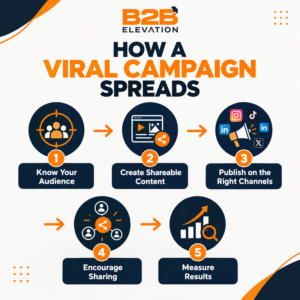
The strategies above give you ideas. The next step is turning one of them into a campaign.
Step 1: Set One Clear Goal
Decide what you want to achieve.
Your goal could be more brand awareness, website visits, email sign-ups, product sales, or app downloads.
Choose one main goal so you can measure whether the campaign works.
Step 2: Mark Your Audience
Find out who you want to reach and what matters to them.
Look at their common problems, interests, questions, and preferred social platforms.
Your campaign has a better chance of connecting when it matches what your audience already cares about.
Step 3: Choose a Shareable Idea
Select one idea from the strategies above.
For example, you could create a funny video, launch a challenge, share a customer story, or publish a useful checklist.
Start with one strong idea rather than trying to do everything at once.
Step 4: Create and Publish the Content
Choose a format that suits the idea and platform, then create content accordingly.
Make the main message clear, use a strong opening, and include a natural call to action. Check that your content works on mobile devices and follows the platform’s rules.
Step 5: Promote the Campaign
Share the content through your relevant channels, such as your social media accounts, email list, website, or creator partnerships.
You can also use paid promotion to test the content with a suitable audience. However, paid views are not the same as organic sharing.
Step 6: Track and Improve Results
Monitor the results and look for signs that people are responding.
If a video receives many views but few website visits, review its message and call to action. If a useful post gets many saves and shares, consider creating more content around that topic.
Use what you learn to improve your next campaign.
How to Measure the Success of a Viral Marketing Strategy
Do not judge a campaign by views alone. Track the numbers that match your business goal.
| Metric | What it tells you |
| Reach | How many people saw your content |
| Views | How often video content was viewed, based on the platform’s definition |
| Shares | How often people passed your content to others |
| Engagement rate | How people interacted with your content relative to a defined base |
| Click-through rate | How often people clicked after seeing a link or call to action |
| Website traffic | How many visits came from the campaign |
| Conversion rate | How often visitors completed a desired action |
| Customer acquisition cost | How much it cost to gain a customer |
Use platform analytics, website analytics, campaign-specific links, and referral codes where appropriate.
For example, if a campaign reaches 50,000 people but produces very few relevant leads, it may have generated awareness without achieving your sales goal.
On the other hand, a smaller campaign that attracts 500 highly relevant visitors and converts some of them into customers may deliver more business value.
The best campaign is not always the one with the most views. It is the one that helps you achieve your goal.
Viral Marketing Examples: What Businesses Can Learn
Real campaigns can help you understand how viral marketing works in practice.
Here are three useful examples of approaches businesses can learn from.
1. Shareable Product Demonstrations
A product demonstration can spread when it shows an interesting result or answers a common question.
For example, a home products brand could create a short video showing how a product solves a problem in a small space.
Lesson: Show the benefit instead of only talking about product features.
2. Relatable Brand Content
A company can use everyday situations to make its content more memorable.
For example, a software brand could create a humorous post about the frustration of managing work across too many spreadsheets.
Lesson: Make your audience feel understood, and connect the message to a real problem your product solves.
3. Customer-Led Campaigns
A business can invite customers to share how they use a product or what they have achieved with it.
Lesson: Give customers a genuine reason to participate, and make it easy for others to learn from their experiences.
These are illustrative campaign ideas, not claims that a particular campaign achieved viral results. For documented real-world cases, study published campaigns and check their reported outcomes before using them as evidence.
Final Thoughts
Viral marketing can help your business reach new people, build brand awareness, and attract potential customers. But success does not come from chasing views alone. It comes from understanding your audience and giving people something worth sharing.
Start with one strategy, such as a short video, a useful guide, a customer story, or a referral program. Set a clear goal, track the results, and improve your next campaign based on what you learn.
You do not need every post to go viral to grow your business. You need a repeatable way to create useful content, build trust, and turn the right attention into lasting results.
FAQs
Q.1: What are viral marketing strategies?
Viral marketing strategies are methods that encourage people to share a brand’s content, message, or product with others. Common examples include short videos, influencer partnerships, customer-created content, referral programs, challenges, and emotional storytelling.
Q.2: How can I make my content go viral?
Start by understanding your audience and creating content that is useful, funny, surprising, or relatable. Use a strong opening, choose the right platform, make sharing easy, and learn from your results. No method can guarantee that content will go viral.
Q.3: What is the best viral marketing strategy?
There is no single best strategy for every business. Short videos may suit a consumer brand, while useful guides, customer stories, and referral programs may work better for a B2B company. Choose a strategy that matches your audience and goal.
Q.4: How does viral marketing help small businesses?
Viral marketing can introduce small businesses to new audiences, encourage word-of-mouth recommendations, and bring more people to their websites. A relevant campaign may also generate leads and sales without requiring a large advertising budget.
Q.5: What makes a marketing campaign go viral?
Content is more likely to spread when people have a strong reason to share it. That reason may be humor, usefulness, emotion, surprise, or a shared interest. Timing, audience fit, distribution, and luck can also affect the result.
Q.6: Which platforms are best for viral marketing?
The best platform depends on your audience and content format. TikTok, Instagram, YouTube, Facebook, LinkedIn, and other online communities can all help content spread. Choose platforms where your target audience is active instead of posting everywhere without a plan.