
What Is Rank Tracking and How It Boosts SEO & AI Visibility in 2026
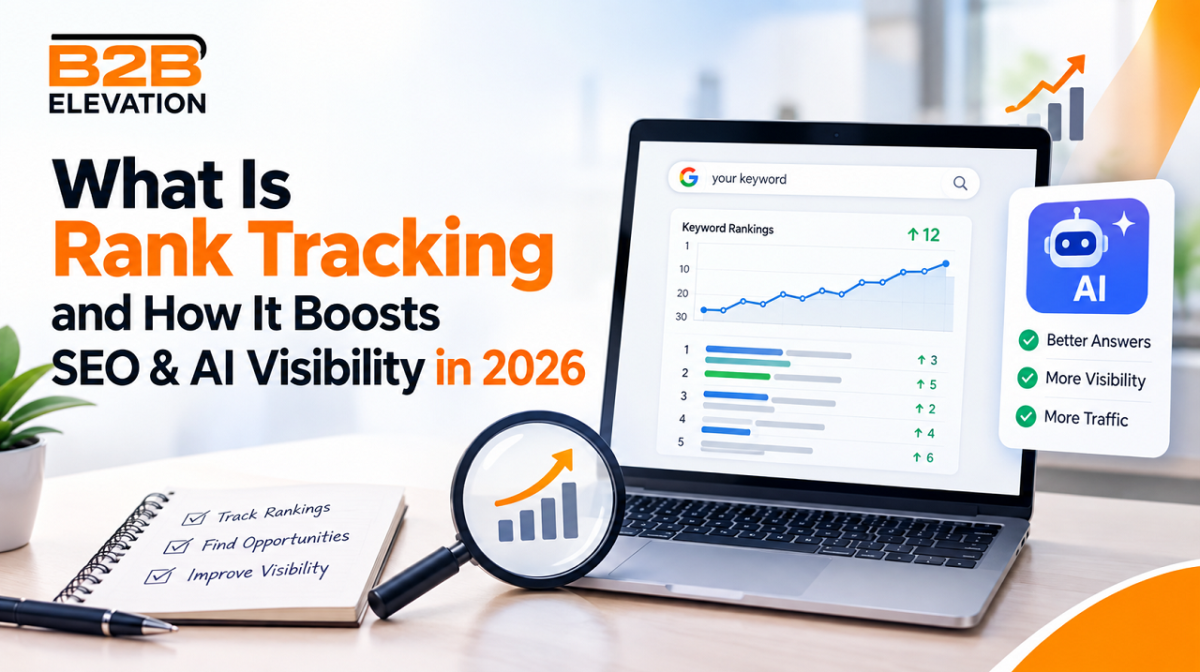
If you want your website to generate more traffic from Google and other search engines, then you need to know where exactly your pages rank. That is why people use rank tracking to identify the positions.
Rank tracking is the process of checking where your website or web pages appear in search results against specific keywords. It helps you see whether your SEO efforts are working, which keywords are gaining or losing positions, and where you have opportunities to improve.
In 2026, rank tracking is also becoming useful for AI search visibility. Search is no longer limited to the traditional list of blue links. AI-powered search features can now summarize information, recommend sources, and answer questions.
So, knowing your rankings can help you measure both traditional SEO performance and your growing visibility across AI-powered search.
What Is Rank Tracking?
Rank tracking is an automated process of monitoring your website’s position in search engine results for specific keywords over time.
For example, imagine you have a page targeting the anchor “B2B SEO services.” Your page may rank at position 28 today, position 15 next month, and eventually reach the first page.
A rank tracking tool records these changes and shows you how your rankings change.
You can use rank tracking to monitor:
- Keyword positions
- Ranking changes
- Organic search visibility
- Competitor rankings
- SERP features
- Search performance over time
- Local search rankings
- Desktop and mobile rankings
This data helps you understand what is working for your website and what needs to be updated or optimized.
How Does Rank Tracking Work?
Rank tracking usually starts with a list of keywords that are important to your business.
A rank tracking tool checks search results for those keywords and records where your website appears. It can then compare your current position with previous results.
For example:
| Keyword | Previous Position | Current Position |
| SEO services | 18 | 8 |
| B2B SEO agency | 9 | 6 |
| SEO planning | 27 | 12 |
This simple data can show whether your website is improving or not.
Many marketing tools also let you track rankings by search engine, device, country, city, and competitor. This is important because search results can change depending on where and how someone searches.
Why Is Rank Tracking Important for SEO?
Rank tracking gives you real data about your SEO performance.
Without tracking, you may publish content, optimize pages, or build links without knowing whether those changes are helping.
Here are the main benefits:
1. Measure SEO Progress
Rank tracking shows the movement of your target keywords, whether they go up or down.
If a keyword moves from position 35 to position 14, your optimization work may produce some good results. If an important keyword drops from position 6 to position 13, you know that page needs more attention.
2. Find Keywords With Growth Potential
Not every keyword needs the same amount of effort.
A page ranking at position 7 may need a few improvements to reach the top results, while a page ranking at position 73 may need much more work.
Tracking helps you find these opportunities.
3. Understand Ranking Drops
A sudden ranking drop can be a warning sign.
It may happen because of:
- A Google algorithm update
- Technical SEO problems
- New competitor content
- Search intent changes
- Changes to your website
- Content that needs updating
- Loss of backlinks
Rank tracking helps you notice these changes earlier.
4. Track Competitors
You can also track how competitors rank for the same targeted keywords.
This can show you which topics they are gaining visibility for and where your website has content gaps.
The goal is not simply to copy competitors. Instead, their ranking data can help you find keywords, topics, and search results that deserve closer research.
Rank Tracking and AI Search Visibility in 2026
Search is changing quickly because of AI.
Google and other search platforms can now provide AI-generated answers, recommendations, summaries, and other search results.
Now, a website has to think about beyond traditional rankings.
For example, your page might rank well for a keyword but also need to provide useful, clear information that AI systems can understand and use as a source.
This is where AI visibility becomes important.
AI visibility refers to how often your website or your brand appears in AI search results.
Rank tracking can support this strategy by helping you identify:
- Important topics and keywords
- Pages with strong organic visibility
- Questions people search for
- Search intent
- Competitor content
- Opportunities to create clearer and more useful content
- Changes in search results
However, Google keyword rankings and AI visibility are not the same metric. A strong Google ranking does not automatically mean an AI system will mention your brand.
Your content still needs to be clear, useful, well-structured, trustworthy,and relevant to the user’s question. So, create content that covers all these important aspects to gain visibility in both Google search and AI-powered search.
How to Use Rank Tracking to Improve SEO
Rank tracking is most useful when you take action based on the data.
Start by choosing keywords that match your business goals and search intent. Then monitor their positions regularly.
When you see a ranking improvement, look at what may have helped. You may have improved the existing content, added useful information, write blogs on relevant secondary keywords to make internal linking, earn backlinks, or fixed a technical issue.
When rankings fall, review the page again.
Ask:
- Does the content still match search intent?
- Are there technical SEO issues?
- Can the content be easier to read and understand?
- Are competitors providing better information?
- Is the page up to date?
- Does it answer the user’s main question quickly?
You can update the page based on what you find.
What Should You Look for in a Rank Tracking Tool?
A good rank tracking tool should provide more than a single keyword position.
Look for features such as:
- Daily or regular ranking updates
- Keyword position history
- Local rank tracking
- Competitor tracking
- SERP feature monitoring
- Mobile and desktop tracking
- Keyword grouping
- Search visibility data
- Easy-to-understand charts
- Ranking reports
Some modern SEO platforms also provide features related to AI search and visibility. These can help you understand how your brand performs as search becomes more conversational and AI-driven.
Rank Tracking vs. Rank Checking
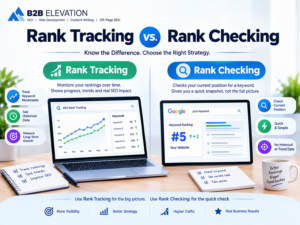
Rank tracking and rank checking are almost similar, but not exactly the same.
If we are looking for their definitions, here are:
Rank checking usually means looking at where a keyword ranks at one point in time.
Rank tracking means monitoring those rankings over time.
This difference matters because SEO is not a one-time activity. Rankings can change every day as search engines update their systems, competitors write content and publish on a daily basis, and users search behaviour changes.
Final Thoughts
Rank tracking helps you understand how your website performs in search results. It shows which keywords are improving, which pages are losing visibility, and where you can find new SEO opportunities.
In 2026, it can also support a wider search strategy that includes GEO, AI visibility, and AI-powered search experiences.
But rankings are only one part of SEO. The goal is to create helpful content that answers people’s questions, provides trustworthy information, matches the search intent, and gives them a reason to choose your business.
Use rank tracking as a guide. Track the right keywords, learn from competitors, study changes over time, and use the data to make informed SEO decisions.