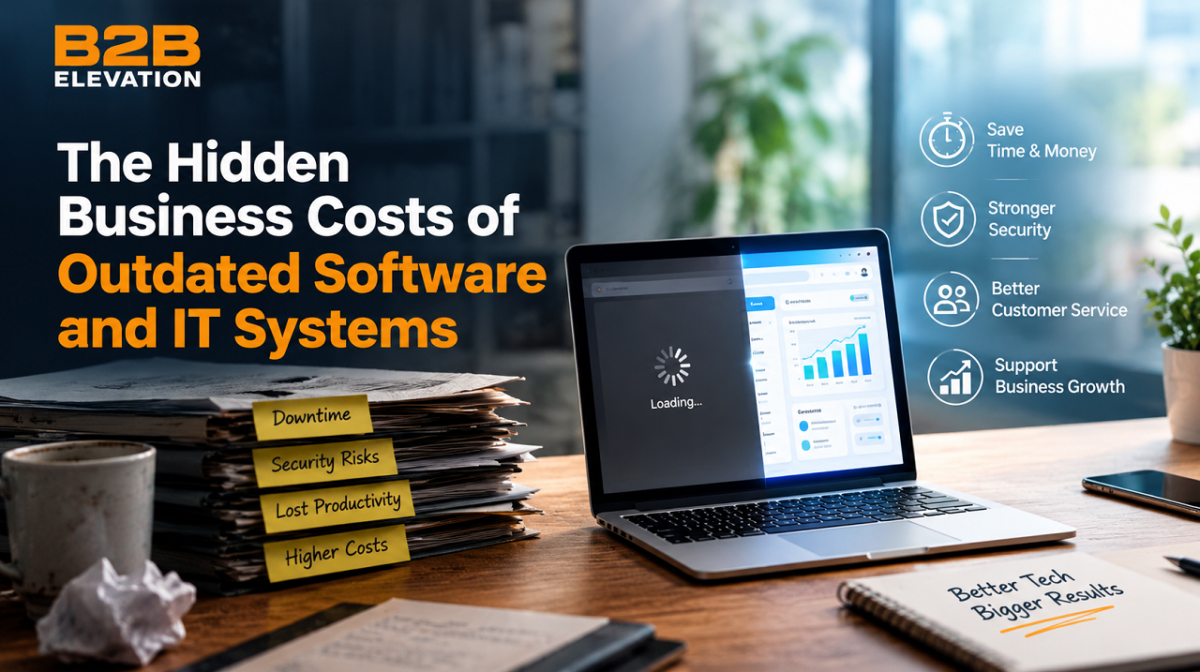
The Hidden Business Costs of Outdated Software and IT Systems
Many businesses spend money on marketing, sales, and customer service to grow their revenue. But they often overlook one important area: the technology they use every day.
Slow software, outdated systems, weak security, and disconnected tools can make work harder and more expensive. These problems affect more than the IT team. They can waste employees’ time, hurt customer experiences, and limit business growth.
For SaaS companies, digital agencies, and other service-based businesses, reliable technology is a key part of running a successful operation. Understanding the hidden costs of poor IT systems can help businesses make smarter decisions and avoid problems before they grow.
1. Slow Systems Waste Time and Money
Employees use software to manage projects, communicate with customers, track sales, and complete daily tasks. When these tools run slowly or stop working, even simple jobs can take much longer.
For example, a marketing team may lose time because its project management tool keeps crashing. A sales team may struggle to access customer details because its CRM software is not working properly.
These small delays can add up across a team. Employees spend less time on important work and more time fixing technical problems.
Businesses can reduce these delays by reviewing their software regularly, removing tools they no longer need, and choosing systems that support their daily work.
2. Disconnected Software Creates Extra Work
Many businesses use several digital tools at once. They may have separate platforms for email marketing, customer management, accounting, project planning, and reporting.
The problem starts when these tools do not work well together.
For example, an employee may need to copy customer details from one system into another. A marketing manager may also need to collect data from different platforms before preparing a report.
Manual work takes time and increases the risk of mistakes. It can also make it harder for managers to understand what is happening across the business.
Software integration and workflow automation can help solve this problem. When systems share information correctly, teams can spend less time on repetitive tasks and more time serving customers.
3. Poor Security Can Lead to Expensive Problems
Businesses store valuable information in their digital systems. This may include customer records, payment details, sales data, and internal documents.
Outdated software and weak security practices can make this information easier for attackers to access.
A security incident may lead to recovery costs, lost working hours, legal issues, and damage to customer trust. Small businesses can face serious challenges if they do not have a plan for handling such problems.
The best approach is to take basic security steps before an incident happens. Businesses should install software updates, use strong passwords, enable multi-factor authentication, and limit access to sensitive information.
Companies should also back up important data and train employees to recognize suspicious emails and links.
Businesses working in specialist industries may need solutions designed for their specific needs. Like, technology for healthcare providers can support healthcare organizations with the systems they rely on to manage digital operations and sensitive information.
The right technology should fit the organization’s needs, security requirements, and daily workflows.
4. Outdated Tools Make Customer Service Harder
Customers expect businesses to respond quickly and provide clear information. Poor technology can make it difficult to meet these expectations.
Imagine a customer contacting a company about an order. The support team cannot find the correct details because the customer records are spread across different systems. The customer must wait or explain the problem again.
Experiences like this can reduce customer satisfaction and make a business look less reliable.
Customer relationship management (CRM) software, help desk platforms, and shared customer databases can help teams manage requests more effectively.
Businesses should choose tools that give employees accurate information without making everyday tasks more complicated.
5. Poor IT Systems Can Limit Business Growth
Technology that works for a small team may not work well when the business grows.
As a company gains more customers, employees, and projects, it needs systems that can handle the extra work. If its software cannot keep up, managers may struggle to track performance, manage new customers, or maintain service quality.
For SaaS businesses, these problems can affect product development, customer support, and the ability to serve more users.
Before adding new tools, businesses should review their current systems and identify where they face the biggest problems. They should consider whether their software can grow with the business, connect with other tools, and support future goals.
Planning ahead can help avoid rushed purchases and expensive changes later.
6. How Businesses Can Reduce Technology Costs
Improving business technology does not always mean replacing every system. In many cases, small changes can make a real difference.
Here are five practical steps businesses can take:
- Review existing software: Identify tools that are slow, outdated, duplicated, or rarely used.
- Automate repetitive tasks: Use suitable software to reduce manual work and common errors.
- Improve security: Keep systems updated and protect important business data.
- Connect essential tools: Integrate platforms where doing so saves time and improves data accuracy.
- Measure performance: Track downtime, support requests, task completion time, and software costs to find areas for improvement.
Businesses should compare the cost of maintaining an existing system with the cost of upgrading it. The best choice depends on the problem, the available budget, and the expected long-term benefits.
Conclusion
Outdated software and poor IT systems can cost businesses more than their monthly technology bills. They can waste employee time, increase security risks, weaken customer service, and make growth harder to manage.
For SaaS companies and digital service businesses, reliable technology supports efficient workflows and better customer experiences. Regular system reviews, sensible automation, stronger security, and well-connected software can help control costs without adding unnecessary complexity.
The goal is not to buy the newest technology available. It is to build a reliable digital setup that helps people work better, serve customers well, and support the business as it grows.